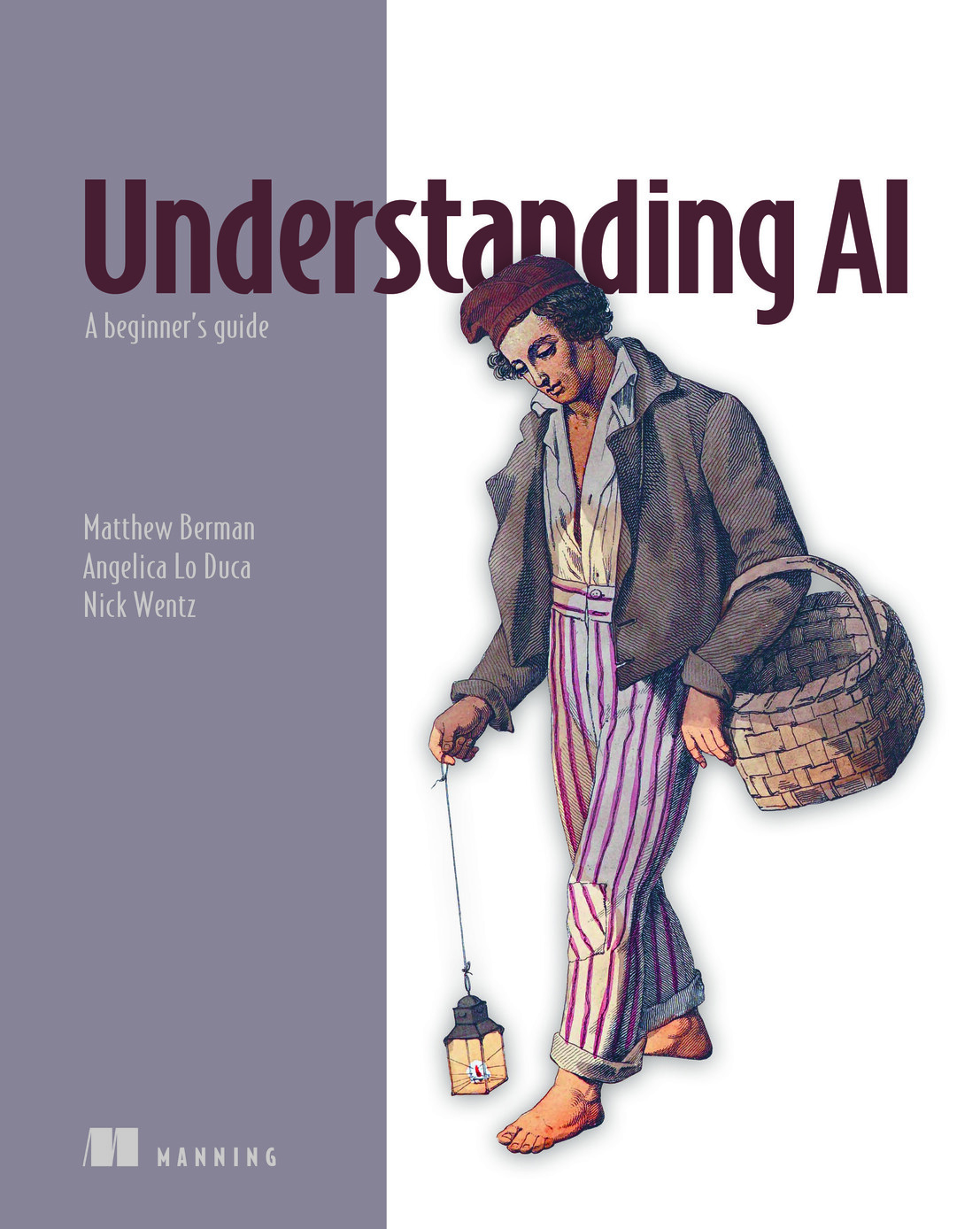
AI is everywhere—from the tools we use at work to the services and products we rely on every day. But keeping up with the terminology, capabilities, and rapid pace of change can be difficult, especially if you’re new to the subject.
Matthew Berman, Nicholas Wentz, and Angelica Lo Duca
Understanding AI: A Beginner’s Guide by Matthew Berman, Nicholas Wentz, and Angelica Lo Duca offers a clear, approachable introduction to artificial intelligence. It explains what AI is, how today’s systems work, what they can and can’t do, and how the technology is likely to affect our lives and careers. You don’t need a technical background or prior experience with AI to get started.
The book is now available through Manning Early Access. You can read chapters as they’re written, follow the book’s development, and share feedback that may help shape the finished edition.
Don’t forget you can get 45% off with your Devtalk discount! Just use the coupon code “devtalk.com” at checkout 
A beginner-friendly foundation is especially useful now that “AI” often jumps straight to agent demos. I’d be curious whether the finished book separates model capability from system behavior: tool access, retrieval, evaluation, and the quality of the context around a model can matter as much as the model label. That distinction helps readers build realistic expectations instead of treating every failure as an intelligence problem.
1 Like
That’s a useful distinction. A model’s capabilities don’t tell the whole story about how an application behaves. Even a capable model can give a poor answer if retrieval brings back irrelevant material or a tool returns incomplete information. Evaluation needs to account for that wider system, too.
I don’t want to promise how the finished book will cover each of those topics while it’s still in development, but this is exactly the kind of feedback that’s valuable during MEAP. Helping beginners distinguish model limitations from problems with context or system design would give them a much better basis for judging both impressive demos and everyday failures.