
Great applications take advantage of established design principles and patterns that maximize performance, maintainability, and reliability. This book helps you master the “Pythonic” approach to architectural principles, such as encapsulation, abstraction, method variation, and more. The examples are in Python, but the techniques will apply to any object-oriented language.
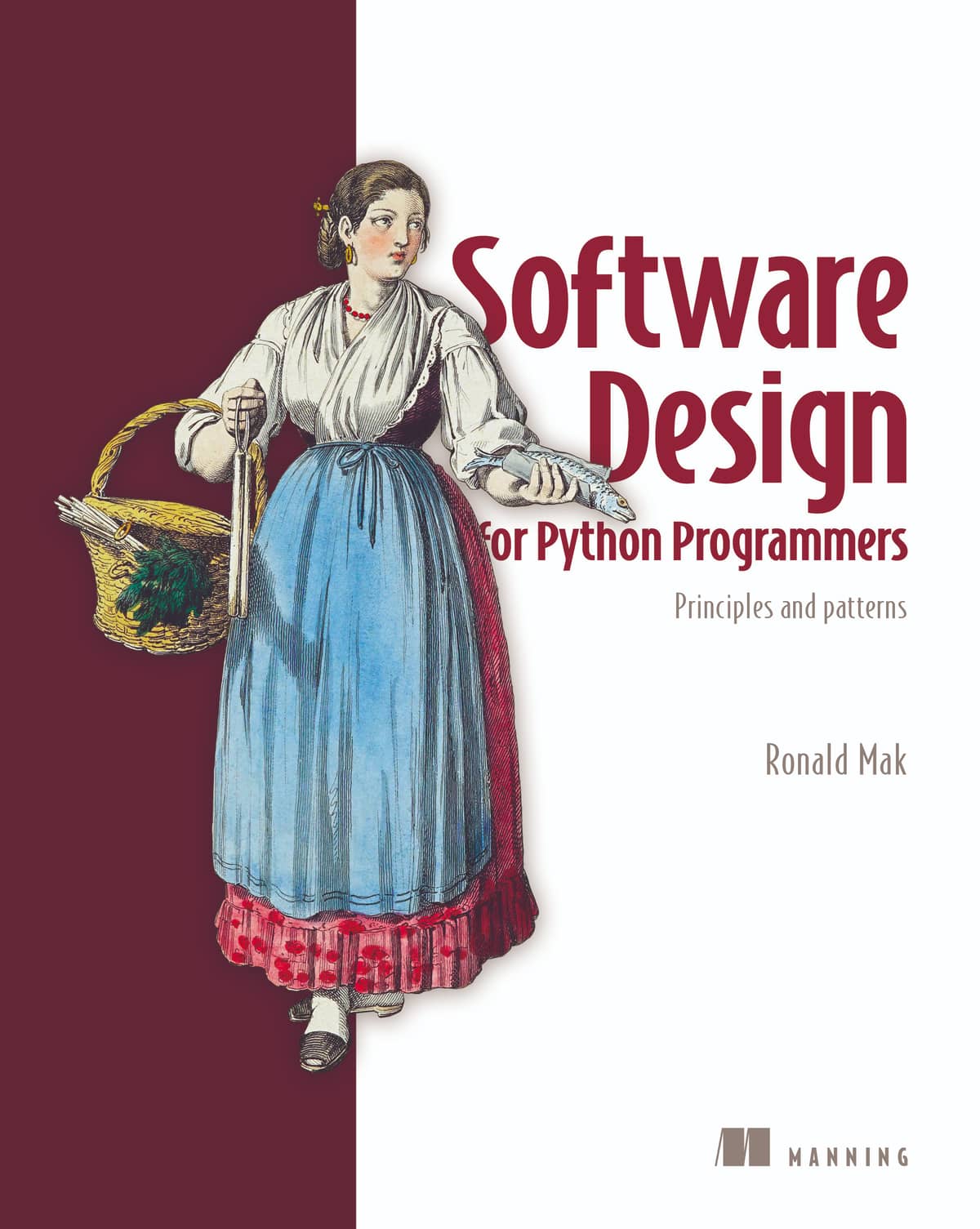
Ronald Mak
Writing Python is one skill. Designing Python software is another.
Software Design for Python Programmers is now available, and it focuses on the decisions that shape how your code behaves as systems grow: how responsibilities are divided, how state is managed, and how small structural choices compound over time.
The book uses clear before-and-after examples to show how designs improve. You see how a piece of code starts, where it struggles, and what changes make it easier to extend, test, and reason about. Instead of presenting abstract rules, the material stays anchored in working Python.
Inside, the author walks through topics that working developers wrestle with:
• Turning requirements into an application structure
• Evolving designs through iteration rather than rigid upfront plans
• Building classes with strong cohesion and minimal coupling
• Using decorators to control behavior and enforce constraints
• Applying design principles that keep modules flexible
• Choosing patterns that solve actual design problems
There’s also a strong emphasis on common failure points in Python projects — unmanaged state, brittle class hierarchies, functions that quietly accumulate responsibilities — and how thoughtful design prevents those issues from appearing in the first place.
Although the examples are written in Python, the ideas carry across languages. The core theme is learning to think about software structure deliberately, not just line-by-line implementation.
- Full details: Software Design for Python Programmers - Ronald Mak
Don’t forget you can get 45% off with your Devtalk discount! Just use the coupon code “devtalk.com” at checkout 