
What changes when AI stops being just a tool you call, and starts becoming part of the way work is planned, delegated, monitored, and executed?
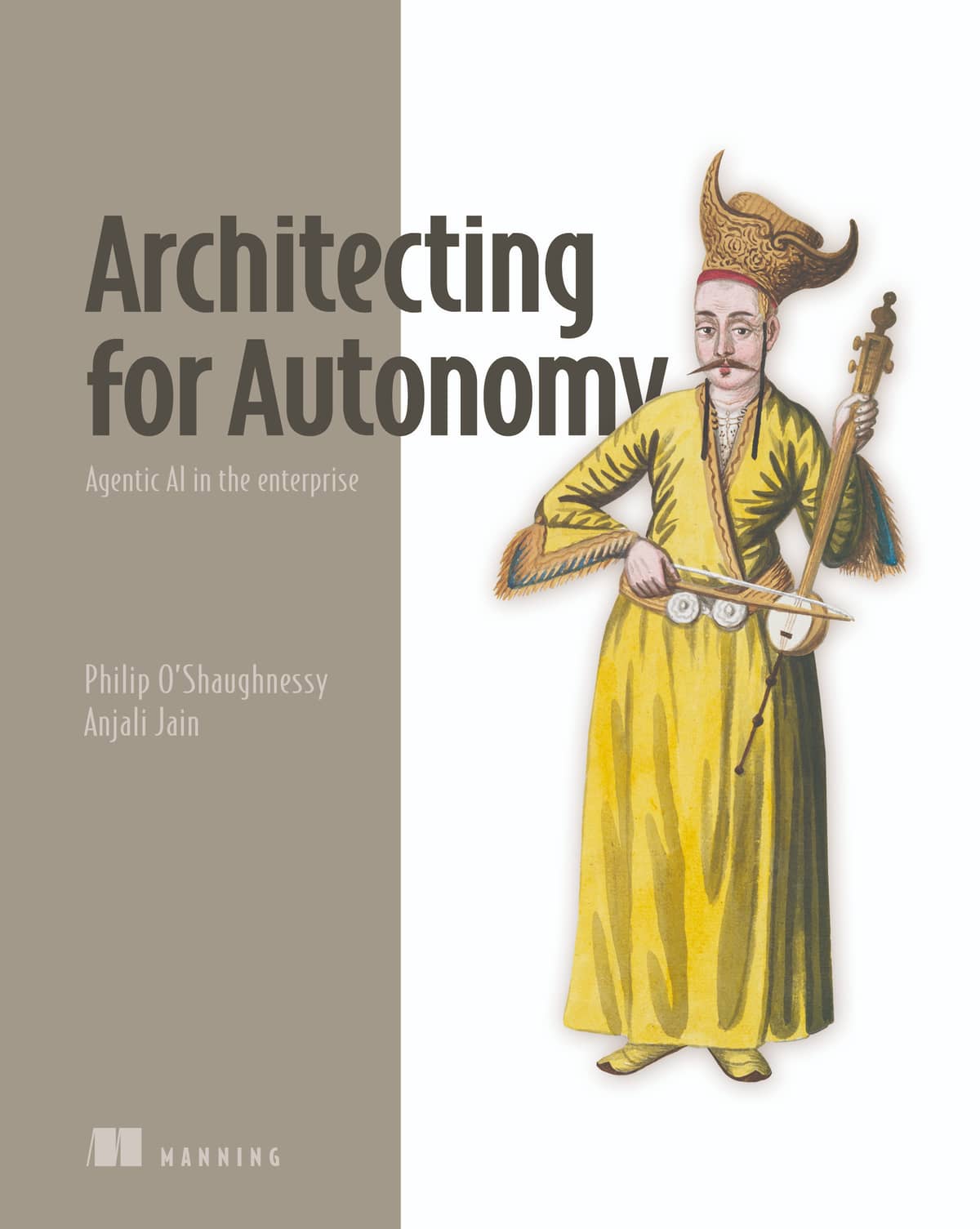
Philip O’Shaughnessy and Anjali Jain
There’s been a lot of excitement around agents, copilots, autonomous workflows, and LLM-powered systems. But in actual organizations, the hard part usually isn’t the demo. It’s deciding where autonomy belongs, what should still require human judgment, how to design escalation paths, how to manage risk, and how architects should think about systems that can take initiative instead of just following fixed rules.
That’s the space this book is focused on. The early chapters cover the shift from automation to autonomy, the changing role of the architect, the economics of autonomy, and business architecture for agentic systems. So it’s not just “how to build an agent,” but how to think about agentic AI as something that has to fit into enterprise systems, teams, governance, incentives, and real decision-making.
If you’re working on AI adoption, software architecture, enterprise systems, MLOps, product strategy, or just trying to separate useful agentic AI ideas from hype, I think this one may be worth a look.
The book is in MEAP now, which means it’s still being written and updated as new chapters come in. As always with MEAPs, early readers can follow along, send feedback, and help shape the book while it’s in progress.
Don’t forget you can get 45% off with your Devtalk discount! Just use the coupon code “devtalk.com” at checkout 