
Apache Iceberg is an open data format that lets data lake files work like database tables. It helps turn a data lake into a more reliable and capable lakehouse.
Alex Merced
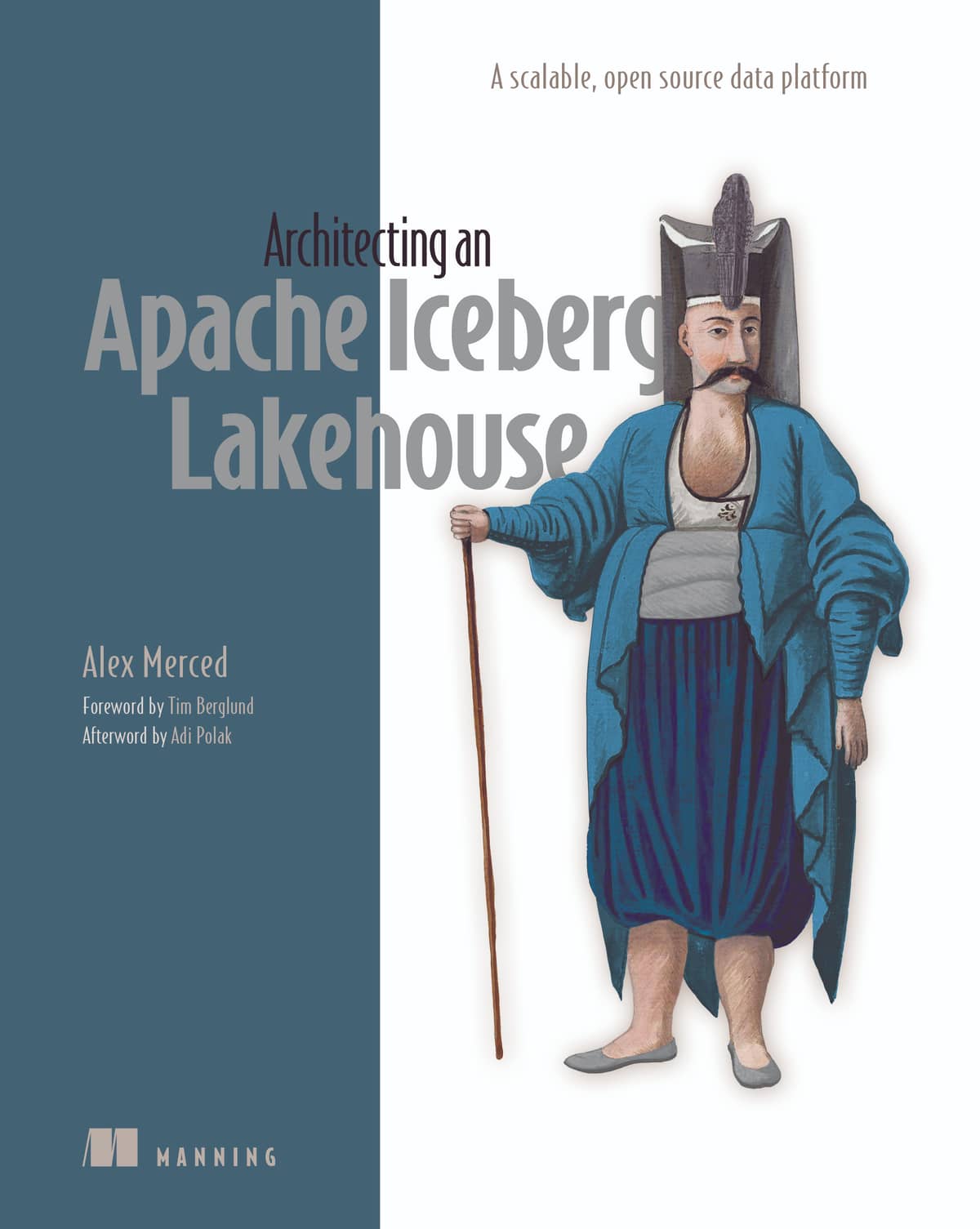
A quick update on a book we shared here earlier while it was still in MEAP—Architecting an Apache Iceberg Lakehouse by Alex Merced is now out in print.
If you followed along during early access, this is the finished version, tightened up and expanded based on reader feedback. And if you skipped it the first time around, it’s a solid, end-to-end look at how to design a lakehouse that stays flexible as your data and tooling evolve.
The book walks through building a lakehouse from scratch using Apache Iceberg, showing how pieces like Spark, Flink, and Dremio fit into a larger system. It doesn’t stop at diagrams—you actually build a working setup, starting with data ingestion from PostgreSQL and ending with analytics dashboards. Along the way, it gets into the decisions that matter in practice: handling schema changes, mixing batch and streaming pipelines, and keeping performance predictable as things scale.
Iceberg itself is getting a lot of traction as an open table format that brings database-like behavior to data lakes. This book gives you a clear picture of how to put it to work without relying on a single vendor stack.
- Full details: Architecting an Apache Iceberg Lakehouse - Alex Merced
Don’t forget you can get 45% off with your Devtalk discount! Just use the coupon code “devtalk.com” at checkout 